Therapy Where You Don't Have to Explain Yourself

There's a particular kind of tiredness that comes from translating yourself.
You learn it early — the quick edit before you speak, the softening, the deciding which parts of your life are safe to name in this room and which to leave out in the car. By the time some people sit down across from a therapist, they've already put in a full day's work before saying a word, just bracing for the moment they'll have to explain, justify, or teach.
Kink-affirming therapy is, at its simplest, a room where you can set that work down — where you get to speak in your first language instead of translating yourself into something more palatable. The door's already open. You don't have to earn your way through it.
That's usually what people are looking for when they search for "kink-affirming therapy" near Louisville or Lafayette. Not a therapist who tolerates their identity, but one who won't make them spend the first three sessions explaining, defending, or educating — one who already understands that consensual kink is a healthy part of many people's relational and erotic lives, not a symptom to be treated. If that's what you're after, this post is for you.
What "affirming" actually means
There's a meaningful difference between a therapist who is tolerant and one who is affirming. A tolerant therapist may not turn you away, but you can feel them quietly bracing, or treating your kink as the thing to be worked around. An affirming therapist starts from a different place: they recognize that kink, BDSM, and power-exchange dynamics, practiced consensually between adults, fall well within the range of healthy human sexuality and relationship. The major mental health bodies stopped framing consensual kink as inherently pathological some time ago, and an affirming clinician practices accordingly — curious, non-judgmental, and free of the assumption that your interests are a problem to be solved.
This matters clinically, not just emotionally. When you don't have to manage your therapist's discomfort, the actual work — whatever brought you to therapy — can move forward without a detour through Kink 101.
What you should not have to do in the room
A kink-affirming stance means certain things are off the table from the start. You shouldn't have to justify that your dynamics are consensual and negotiated. You shouldn't be steered toward the assumption that your interests stem from trauma — sometimes there's a connection worth exploring, often there isn't, and an affirming therapist lets you lead that inquiry rather than imposing it. And you shouldn't encounter the quiet pathologizing that treats a fulfilling kink life as something to grow out of.

Where kink-affirming therapy fits within relationship work
Plenty of the people I work with bring concerns that have nothing directly to do with kink at all — communication, anxiety, life transitions, parenting, the ordinary weather of long relationships. They simply want a therapist in whose office they can be fully themselves while addressing those things. Others come specifically to work on the relational dimensions of their dynamics: negotiating boundaries and consent, navigating differing desires between partners, integrating a power-exchange relationship with the logistics of daily life, or holding kink alongside non-monogamy. An affirming, systemically trained therapist can hold all of that as the legitimate relational terrain it is.
The throughline of my practice — people, not problems — fits this work naturally. I'm far more interested in understanding the relationship and the people in it than in measuring anyone against a narrow template of how intimacy "should" look.
What a first conversation looks like
Reaching out to a new therapist is its own small act of courage, so I try to make the first step low-stakes. A consultation isn't an intake interview or an audition — it's a short, no-pressure conversation to feel out whether we're a good fit. You don't have to arrive with a tidy explanation of your relationships or your dynamics, and you don't have to disclose anything you're not ready to. Mostly it's a chance to ask me questions, hear how I work, and notice how it feels to talk to me — because that felt sense of safety is, in my experience, the most honest data you have about whether a therapist is right for you.
If we decide to work together, we go at your pace. Nothing about kink, power exchange, or non-monogamy becomes the headline unless you want it to be.
-
No. You're welcome to share as much or as little detail as feels useful, and I won't ask you to account for the fact that your relationships are consensual and negotiated — I start from the assumption that they are. We'll spend our time on what you came in for, not on getting me up to speed about your erotic life.
-
No. Sometimes there's a meaningful connection between someone's history and their desires that's worth co-exploring, and often there isn't — either way, you lead that inquiry, not me. I won't go hunting for a wound to explain something that may simply be a part of who you are.
How to find a kink affirming therapist near you
A few practical pointers as you search around Boulder County:
Look for explicit language. Therapists who are genuinely affirming usually say so, often referencing GSRD (gender, sexual, and relationship diversity) or kink-aware and kink-affirming practice in their profiles.
Use the consultation to ask directly: What's your experience working with clients in kink or power-exchange relationships? Listen for ease and familiarity rather than a careful pause.
Consider widening your geography. My clients drive from across the Front Range and Western Slope, they tell me that the drive is worth it to find a clinician who, without judgement, grasps their full experiences.
A welcoming office, close to home
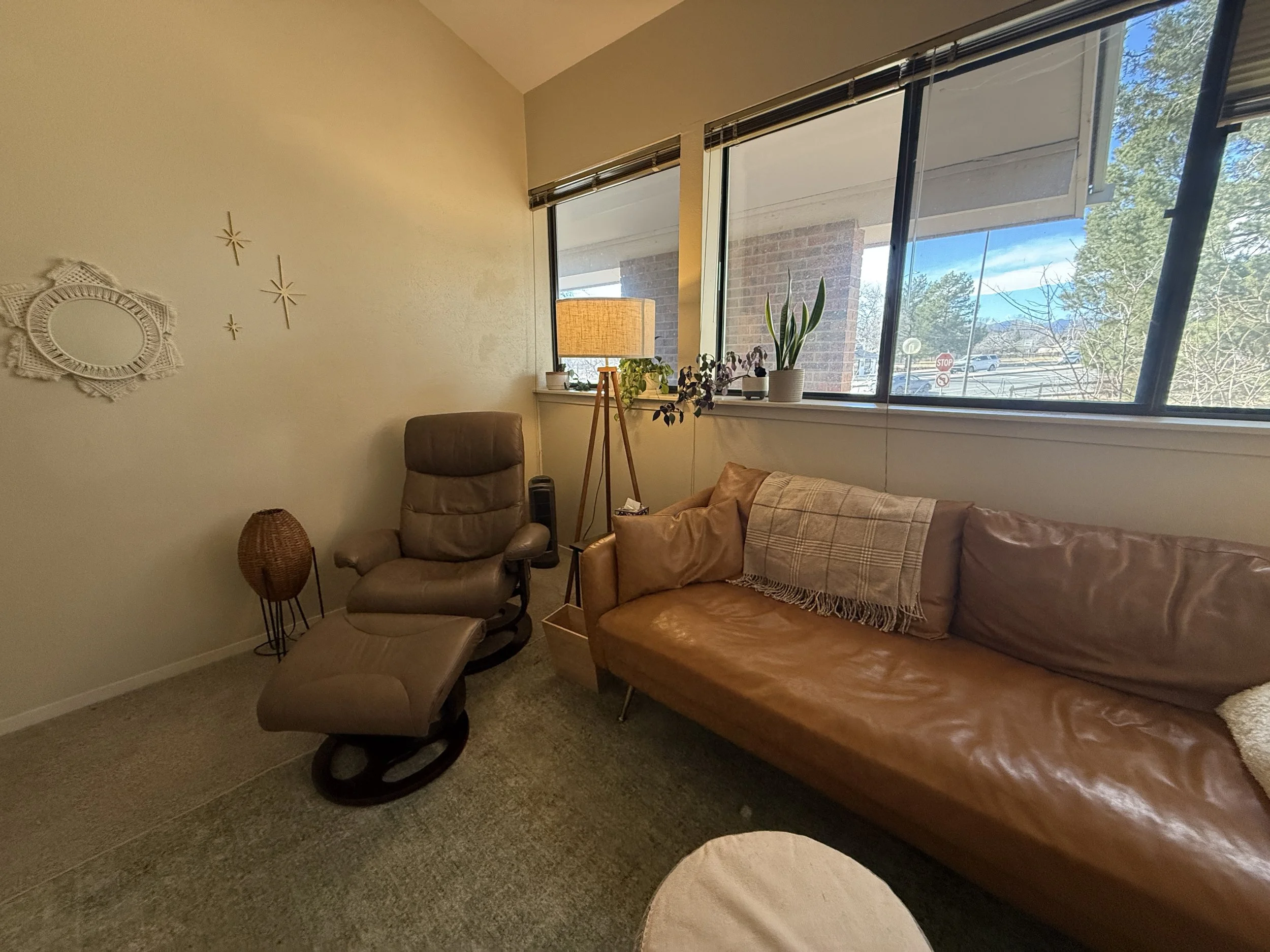
My practice is based in Louisville and serves clients throughout Lafayette, Louisville, greater Boulder County, the Front Range, and beyond. It's a space built on the premise that you don't have to leave any part of yourself at the door to do good work — whether you're here about your relationship dynamics specifically or simply want a therapist with whom you can be wholly honest about your desires.
If that's the kind of fit you've been looking for, I'd welcome a conversation. I offer a complimentary, no-pressure consultation to see whether we're a good match.
Take the first step toward building a stronger, more connected, and perhaps erotic relationship. Schedule your Free Initial Consultation today and begin your journey toward understanding and belonging!