We're Not Playing Whack-a-Mole
A foundational note on how I work — and why "more," "better," and "less" were never the point.
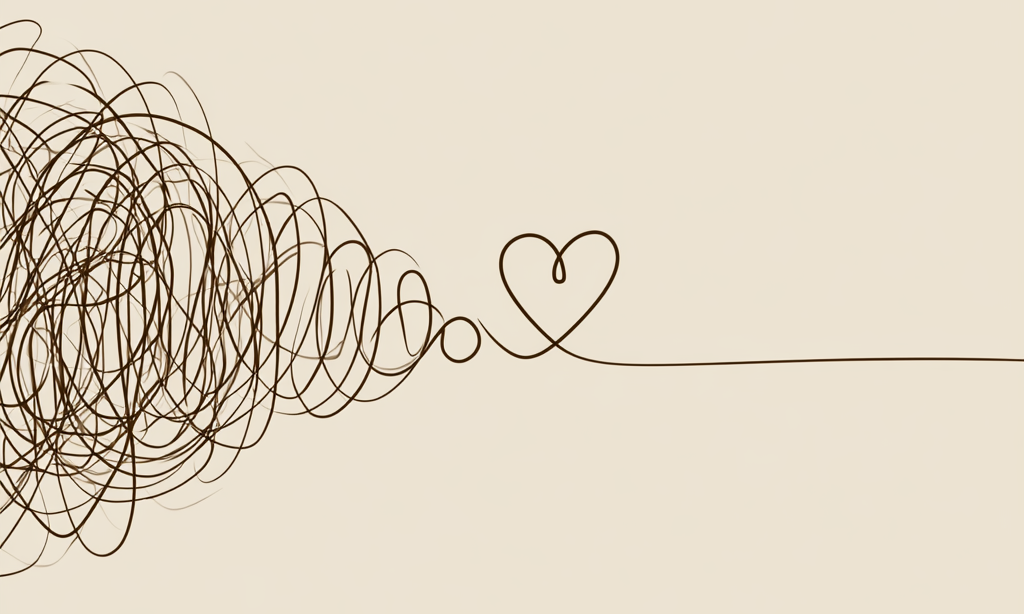
Most of the therapy I see is a game of whack-a-mole. A symptom pops up, you hit it. Another one surfaces, you hit that one too. The couple fights about money, so you teach them to fight about money more politely. Anxiety flares, so you hand over a coping skill. It feels like progress, because something got hit. But the moles keep coming, because the board never changed. Only the moles did.
I don't work that way. I learned not to from a handful of people who spent their lives on a different question. Not how do we make this symptom smaller, but what is the pattern that keeps generating it, and what would it take to change the whole thing.
That's the work. Let me walk you through how it actually goes.
First, I look at the whole board
Before we touch a single problem, I want to understand the system that's producing it. This is the part people don't expect, because they came in pointing at the mole.
So we zoom in — what exactly happens, in this moment, between these two people, in this body. Then we zoom out — where did this pattern come from, what did it once protect, whose voice is in it, what family or culture handed it down. And then we move across domains, because the thing happening in the bedroom is usually the same thing happening at work, the same thing happening with the kids, just wearing different clothes.
What I'm doing is pattern recognition. I'm not collecting symptoms, I'm listening for the one shape underneath all of them. Most couples who come in for couples therapy are convinced they have twelve problems. They have one, living everywhere. We just have to see it clearly enough to name it.
This is the assessment, the first movement of a model I learned from H. Luis Vargas, my former supervisor and one of my great teachers. It's the part I won't rush. He taught me that the assessment is already the intervention — that seeing the pattern truly is the beginning of it changing.
Then we build a goal worth reaching
Here's where I part ways with most of the field.
I'm not interested in more. Not in better. Not in less. More communication, firmer boundaries, fewer fights — those are first-order goals. They rearrange the furniture in the same house. You'll feel a little lighter for a week, and then the room fills back up, because the rules of the house never changed.
What I'm after is second-order change. A different house. Paul Watzlawick named this distinction decades ago, and once you see it you can't unsee it. First-order change works inside the existing frame. Second-order change transforms the frame itself. Not a better version of what you had — something genuinely new.
So the goal we build together isn't "stop fighting about retirement." It's a transformation in what the two of you are to each other, one that would make the old fight unnecessary rather than just quieter. A true goal changes the system. You can feel the difference when you land on one. It doesn't feel like relief. It feels like the ground moving.
And then, before we go anywhere near it, we sit with what it would cost.
This is the part most approaches skip, and skipping it is why the gains evaporate in the parking lot. I call it the dilemma of change. Reaching the goal is never free. The fight you want to end is also doing something for you — protecting you from something, justifying a distance, keeping a grievance clean and useful. If we don't name that out loud, the part of you that still needs the old pattern will quietly sabotage the new one. So we hold both honestly. What you'd gain, and what you'd have to give up to have it. Real change asks you to grieve something. I won't pretend otherwise.
Then we go do it — in the body, not the head
You cannot learn to ride a bike from a lecture.
I say this to almost everyone, because it's the truest thing I know about how people actually change. You can read every book on balance. You can understand the physics. You can have someone explain, very patiently, exactly what to do. And you'll still fall, right up until the day your body simply finds it — and then you never lose it again.
Congruence is like that. Virginia Satir built her whole life's work on it. The shift we're after can't be installed through information or instruction or a better worksheet. It has to be lived, in the room, in the body, in real time. So that's where I take it. We don't talk about the new pattern. We practice being inside it, both of you on the floor, until something in the nervous system goes oh and the change becomes yours.
Michael White and David Epston gave me the other half. They taught me to help people separate themselves from the problem — to stop being the problem and start being the author of a different story. When a couple stops saying we are broken and starts saying this pattern got into us, and we can write our way out, that isn't a reframe. That's the floor shifting.
Why I work the humans first
Here's the part I most want you to understand, because it's the heart of it.
I don't work on the relationship first. I work on the people first.
I've watched the other way produce something hollow — a couple who communicate beautifully, repair on cue, run all the right routines, and house two people who never came home to themselves. A well-built house with nobody living in it. I won't help build that. Satir wouldn't either. For her, the relationship was never the patient. It was the medium. The target was always the worth and the wholeness of the actual person in the chair.
So I work one human toward their own congruence, then the other, and I trust the relationship to reorganize around two whole people. Often it does. Two people who've each come home to themselves tend to find a third thing together that's better than anything they could have negotiated.
But I'll be honest with you, because this is the brave part of the work. Sometimes it doesn't.
If I learn to ride the bike and you don't — if I find my change and you haven't yet found yours — we might get agitated with each other. We might not fit the way we used to. And sometimes a couple, having each gone looking, parts ways. That isn't painless, and I won't dress it up. But I'd still take it over the alternative, where two people stay comfortably stuck and call it a marriage. Because even there, especially there, something true happened. You connected with your essence. You found a renewal. You changed at the level that lasts.
That's second-order change. Not the restoring of what was. The building of something new — first in you, and then, I hope, between you.
That's the work. It's not whack-a-mole. It never was.
-
That's common, and it isn't a deal-breaker. Hesitation is usually protecting something worth understanding, not a sign you're in the wrong room. The work holds both of you at once — the readier partner isn't pulling the other along, and the more hesitant one isn't being managed into agreeing. Readiness is mostly a question of timing, not a verdict on your relationship. If you're unsure where the two of you actually land, the consultation and the short readiness check are good places to feel that out before anything's decided.
-
Most couples therapy works on the symptom in front of you — the fight, the distance, the silence — and tries to make it smaller or smoother. I'm after the pattern underneath all of them, the one shape that keeps generating them. So instead of a tidier version of the relationship you already have, we build toward something genuinely new. If past therapy helped for a week and then faded, that's usually the tell that it was treating the symptom and not the system.
Different not just better.
This is the whole reason couples therapy at People Not Problems looks different from what you may have tried before. I work with couples and individuals in Louisville, CO, mostly through relationship intensives — concentrated, experiential work built around one transformational goal instead of a weekly chip at the symptoms. If it resonates, reach out for a consultation and we'll talk about what's possible for you.
Take the first step toward building a stronger, more connected romantic relationship. Schedule your Free Initial Consultation today and begin your journey toward understanding and belonging!